DOWNTOWN — Hundreds of protesters gathered Thursday evening at Daley Plaza, honoring the legacy and call to conscience of Rep. John Lewis five years after the civil rights leader’s death.
The Good Trouble Lives On protest was part of a nationwide movement of over 1,600 rallies and actions calling on people to carry forward Lewis’ fight for justice, voting rights and dignity for all in response to attacks on civil and human rights by President Donald Trump’s administration.
Organizers demanded an end to policies targeting Black and Brown people and immigrants, as well as stopping cuts to Medicaid, SNAP and other programs.
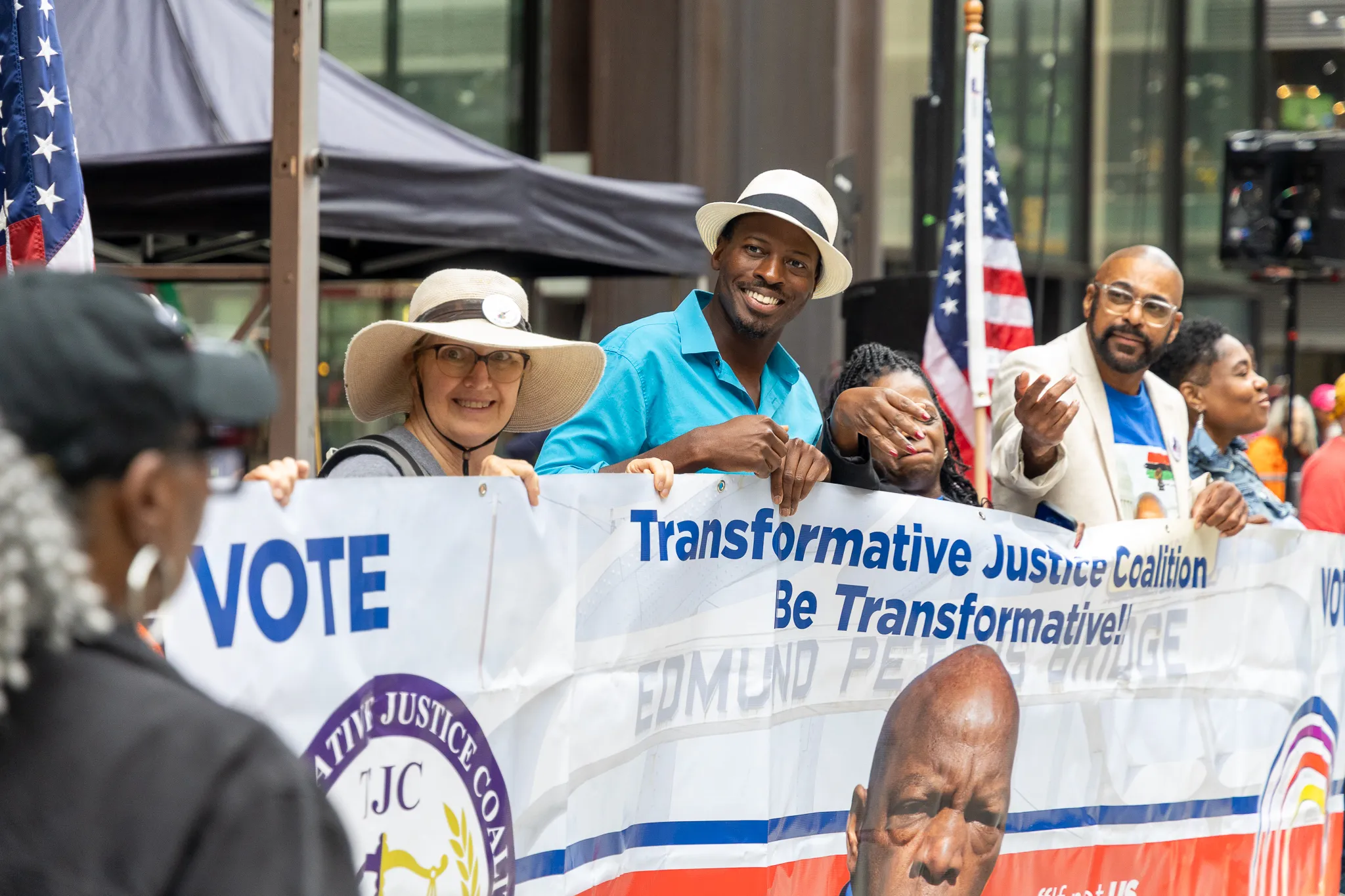
“We’re here to say to that do-nothing Congress, that dangerous rubber-stamping Congress, that we the people are the only people who count,” said Barbara Arnwine, president of the Transformative Justice Coalition. “When the next election is held, we’re not going to stand for this.”
Lewis was the youngest and last survivor of the Big Six civil rights activists, a group led by the Rev. Martin Luther King Jr. during the Civil Rights Movement. In 1965, Lewis, then 25 years old, led 600 peaceful protesters in the Bloody Sunday march across the Edmund Pettus Bridge in Selma, Alabama, where law enforcement and armed citizens attacked them. Five months later, then-President Lyndon Johnson signed the Voting Rights Act.
Lewis was elected to Congress in 1986.
“Get in good trouble, necessary trouble, and redeem the soul of America,” Lewis said in 2020 while commemorating the anniversary of the Bloody Sunday march.
Lewis’ words inspired the theme for Thursday’s memorials, with speakers talking about fighting for civil rights and resisting the Trump administration’s policies as a way of honoring his legacy.
“John Lewis knew that the struggle for equity and justice and freedom passes from one generation to the next. And today, as we honor his memory, not with ceremony but with action, like John Lewis, we are unafraid, unrelenting and unstoppable,” said Becky Pringle, president of the National Education Association. “It’s our turn now to take up that struggle of the beloved community.”
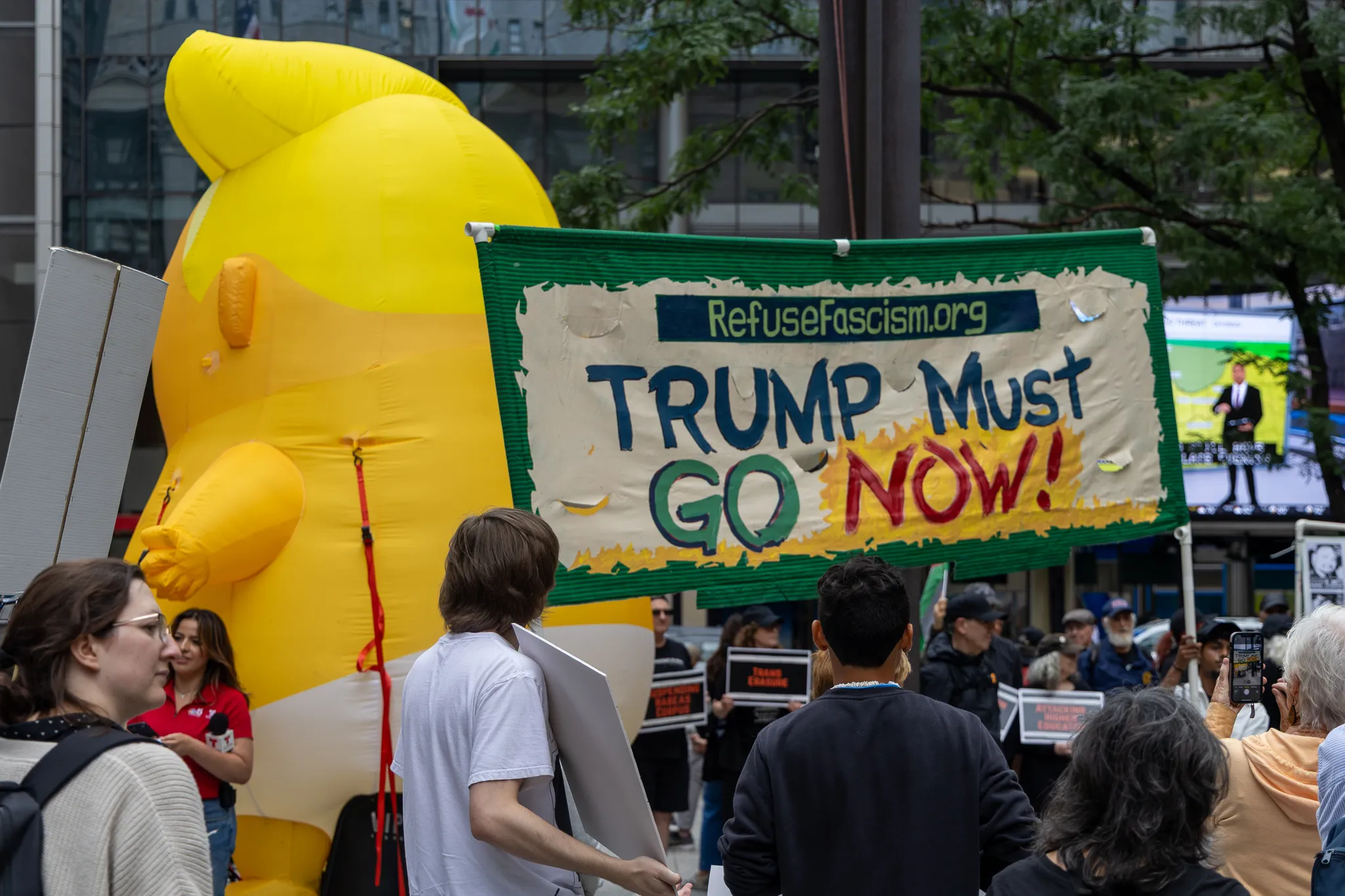
Chicago’s rally was hosted by a coalition of organizations, including the Rainbow PUSH Coalition, Transformative Justice Coalition, Public Citizen, Declaration for American Democracy, Black Voters Matter, League of Women Voters and The Leadership Conference. Similar to last month’s No Kings demonstrations, organizers in Chicago and across the country drew attention to how the Trump administration’s policies are harming their communities.
Chicago Mayor Brandon Johnson spoke midway through the rally, reaffirming Chicago’s status as a sanctuary city. To Johnson, “good trouble” means standing up against immigration raids on undocumented residents, he said.
“His private, handpicked, militarized force will not intimidate us. They will not come in and kidnap our people,” Johnson said. “We will stand firm as a welcoming city, ensuring the immigrant community is protected.
“Even in the midst of the greatest transfer of wealth from working class to billionaires in our lifetimes, we are not going to settle, sit down, cower, balk or cry, but we are going to march.”
Johnson also promised to protect the rights of LGBTQ+ Chicagoans and protect public education and reproductive rights.
Some speakers, like Indivisible Chicago’s Deb Rosenberg, pushed for passing legislation like the John R. Lewis Voting Rights Advancement Act to strengthen legal protections against discriminatory voting policies.
Others, like Chicago Women Take Action’s chair Jacky Grimshaw, likened Trump to a tyrannical King George III, repeatedly calling him “the orange man.”
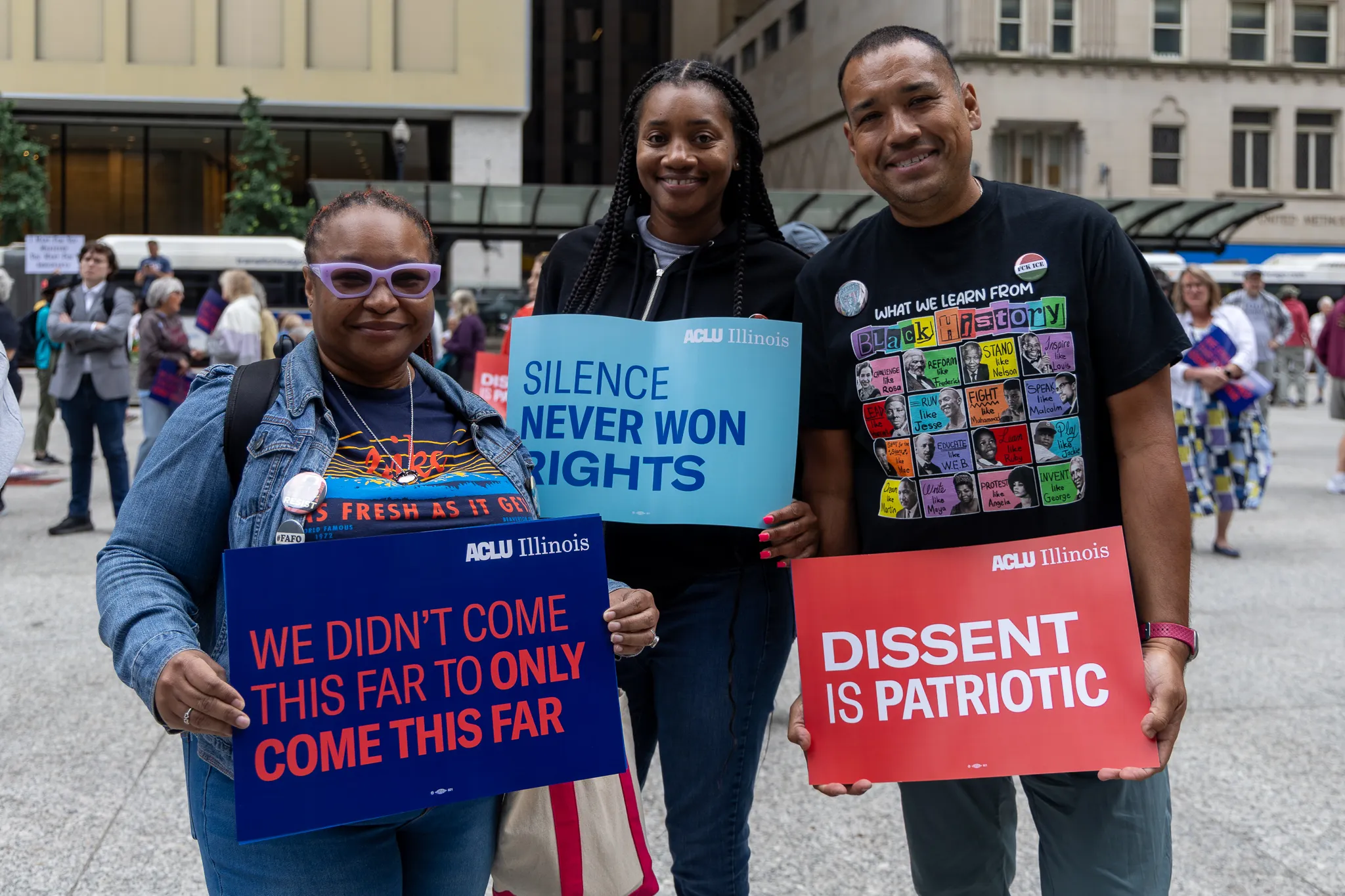
Protesters holding signs filled Daley Plaza. Some signs had photos of Lewis, and many bore slogans such as “Good Trouble Lives On,” “Silence Never Won Rights” and “Dissent is Patriotic.”
When Trump signed the “One Big Beautiful Bill Act” into law July 4, Joan Oliva was horrified by how it slashed Medicaid and other programs to help offset tax cuts and new spending, she said. This has been her third protest since Trump re-took office, she said.
“He makes me madder every day. … It’s just disgusting what they’re doing to human beings and killing so much government funding for people that really need it,” Oliva said. “I’m tired, and I’m sick of it.”
Protester Eduardo Díaz said that as the son of immigrants, ICE arrests in Chicago and across the United States have left him on edge — and prompted him to attend Thursday’s rally.
“They’re doing it for quotas. They’re not doing it for the criminals; they’re taking anyone who looks like me or speaks like me,” Díaz said. “I’m here for my parents who cannot be here because they’re afraid, and that’s unfortunate.
“I’m here because I’m not going to be silent, and I’m going to resist.”